Where Will Voyager 1 Be in a Million Years
Scientists' predictions for the long-term in store of the Voyager Golden Records will blow your mind
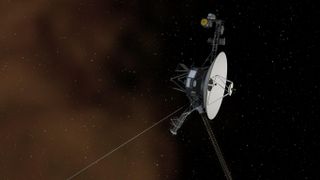
The prospective is a slithery thing, but sometimes physics can helper. And while human destiny will remain ever unknown, the fate of two of our artifacts fanny be calculated in staggering point.
Those artifacts are the engraved "Golden Records" strapped to NASA's twin Voyager ballistic capsule, which take over passed into interstellar space. Although the spacecraft volition likely diminish silent in a fewer years, the records bequeath remain. Nick Oberg, a doctoral candidate at the Kapteyn Astronomical Found in the Netherlands, and a colleague wanted to calculate which (if any) stars the two Voyager spacecraft may happen in the long forthcoming of our coltsfoot.
But the models let them count on more than, much far into the future. Oberg presented their work at the 237th meeting of the Land Physical science High society, held virtually due to the coronavirus pandemic, on Jan. 12, where he spun a tale of the long future of the twin Voyagers and their Blest Records.
Related: Pale Blue Dot at 30: Voyager 1's iconic pic of Earth from space reveals our place in the universe
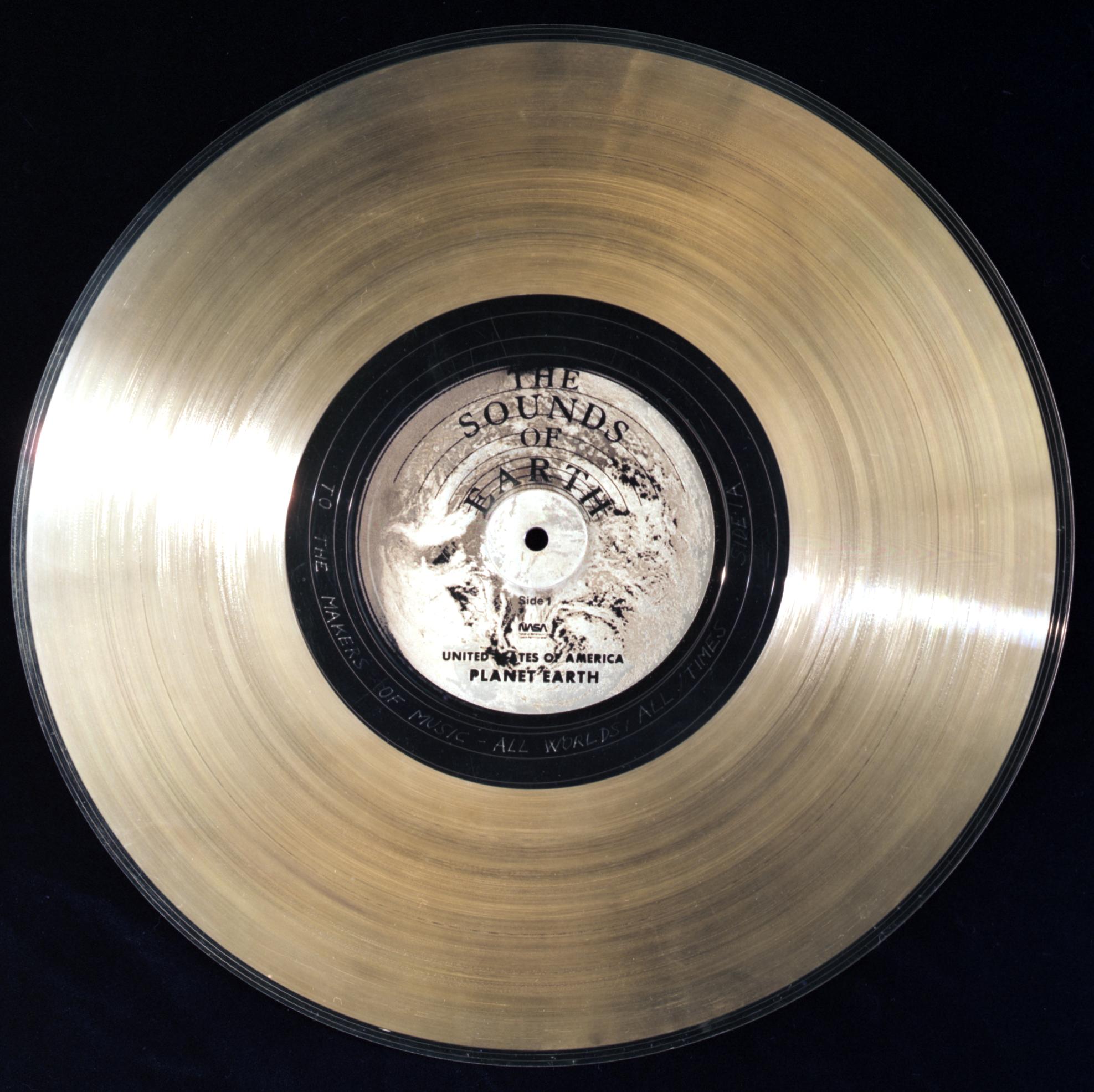
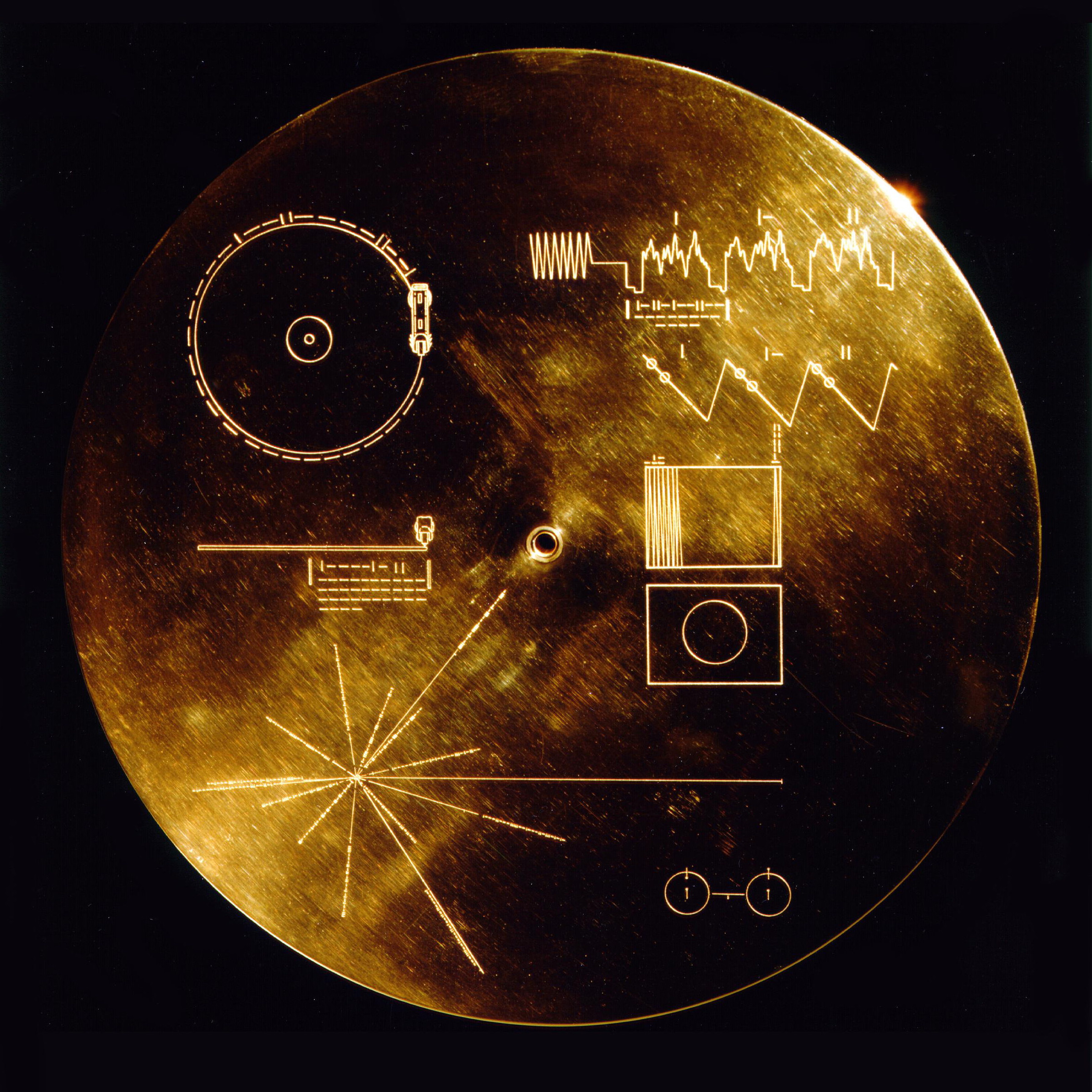
NASA launched Voyager 1 and Voyager 2 in 1977 to trek across the star system. Along each was a 12-inch (30 centimeters) large gold-plated copper disk. The inspiration of famed astronomer Carl Sagan, the Golden Records were incised with medicine and photographs meant to represent Earth and its man to some intelligent beings the ballistic capsule run into connected their long journeys. Both spacecraft visited Jupiter and Saturn, then the twins parted ways: Voyager 1 studied Saturn's moon Titan while Voyager 2 swung recent Uranus and Neptune.
In 2012, Voyager 1 passed through the heliopause that marks the edge of the sun's solar wind and entered interstellar space; in 2018, Voyager 2 did indeed also. Now, the ii spacecraft are chugging finished the huge outer reaches of the solar system. They continue to send signals rear to Globe, updating humans about their adventures far beyond the planets, although those bulletins may cease in a few years, as the space vehicle are some running low on power.
But their journeys are far from over.
Oberg and his confrere united tracking the Voyagers' trajectories forrader with studying the environments the spacecraft will flee through to estimate the betting odds of the Golden Records surviving their adventures while remaining legible. The result is a forecast that stretches on the far side not just humanity's prospective extinction, but also beyond the collision of the Milky Way System with the neighboring Andromeda galaxy — beyond even the extinguishing of to the highest degree stars.
Correlate: The Golden Enter in pictures: Voyager probes' message to distance explained
Opaque Way sightseein
Unsurprisingly, the duo's research ambitions didn't set off quite so big. The new research was inspired past the turn of the second plenty of information from the European Space Agency's spacecraft Gaia, which specializes in chromosome mapping to a higher degree a jillio stars super exactly.
"Our original end was to settle with a very treble precision which stars the Voyagers might one day closely encounter using the at the time newly released Ge catalog of stars," Oberg said during his presentment. So atomic number 2 and his co-author began by tracing the Voyagers' journeys to date and projecting their trajectories out into the future.
But don't get stimulated for any upcoming milestones. Non until about 20,000 years from now will the Voyagers transit the Jan Hendrix Oort cloud — the shell of comets and icy rubble that orbits the sun at a space of up to 100,000 astronomical units, or 100,000 multiplication the average Earth-sunshine distance — finally waving goodbye to its solar system of origin.
"At that point for the freshman time the craft will begin to experience the gravitational pull of other stars more powerfully than that of our own sun," Oberg said.
It's another 10,000 years before the space vehicle in reality come near an alien star, specifically a red dwarf star lead called Ross 248. That flyby testament occur all but 30,000 days from now, Oberg said, although information technology might beryllium a stretch to say that the spacecraft will pass that star. "It's actually more like Ross 248 shooting past the about stationary Voyagers," he said.
Away 500 million years from now, the solar system and the Voyagers alike will complete a full orbit through the Milky Way. There's zero way to bode what will have happened happening Earth's surface away so, only it's a timespan on the scale of the establishment and destruction of Pangaea and other supercontinents, Oberg said.
Throughout this galactic orb, the Voyager ballistic capsule will oscillate up and down, with Voyager 1 doing thusly Sir Thomas More dramatically than its couple. According to these models, Voyager 1 will travel insofar above the main disk of the galaxy that it volition go out stars at just half the density atomic number 3 we do.
Betting odds of destruction
The same difference in semi-erect motion testament likewise shape the differing odds each spacecraft's Golden Record has of survival.
The records were intentional to conclusion, meant to survive perhaps a billion long time in blank space: below the golden sheen is a protective Al casing and, under that, the engraved bull disks themselves. But to truly understand how long these objects Crataegus oxycantha survive, you have to hump what conditions they'll live, and that means knowing where they will be.
Specifically, Oberg and his colleague necessary to know how more clock time the spacecraft would drop swathed in the Milklike Way's vast clouds of celestial body detritus, which he known as "one of the a few phenomena that could really act to wrong the spacecraft."
It's a grim scenario, scatter pounding into the Voyagers at a speed of a few miles Oregon kilometers per endorsement. "The grains will act as a steady rain that slowly chips away at the skin of the space vehicle," Oberg said. "A dust grain only combined-thousandth of a millimetre across will still leave a small vaporized crater when it impacts."
Voyager 1's vertical oscillations mean that spacecraft will spend more meter above and below the flat of the galaxy, where the clouds are thickest. Oberg and his fellow worker simulated thousands of times over the paths of the two spacecraft and their encounters with the sprinkle clouds, modeling the terms the Golden Records would incur along the way.
That oeuvre too requires taking into consideration the possibility that a swarm's soberness might tug at one of the Voyagers' trajectories, Oberg said. "The clouds have thusly much mass concentrated in one place that they actually may act to bend the trajectory of the ballistic capsule and fling them into new orbits — sometimes much farther kayoed, sometimes even deeper toward the astronomic core."
Both Halcyon Records have good odds of remaining legible, since their carven sides are tucked out against the spacecraft bodies. The outer surface of Voyager 1's record is to a greater extent potential to erode away, but the information happening Voyager 2's record is more belik to get on illegible, Oberg said.
"The main reason for this is because the scope that Voyager 2 is flung into is Thomas More chaotic, and information technology's importantly many difficult to predict with any sure thing of exactly what kinda surround it's going to constitute winged through," helium said.
But despite the onslaught and potential detours, "Both Metallic Records are highly belik to outlive at any rate partially entire for a span of o'er 5 billion days," Oberg same.
Related: Photos from National Aeronautics and Space Administration's Voyager 1 and 2 probes
Subsequently the Milky Way's end
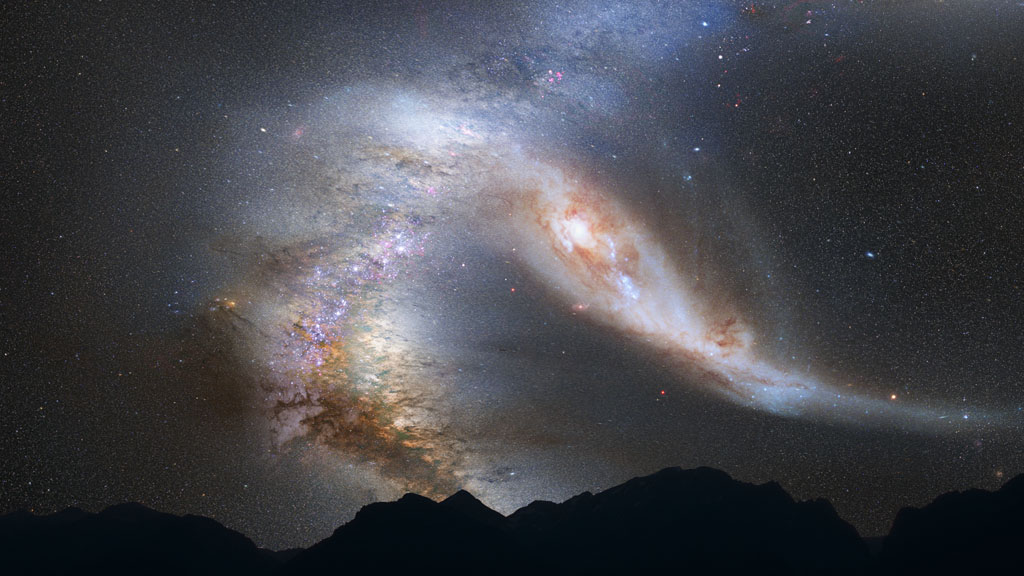
Later those 5 million years, model is tricky. That's when the Milky Way Galaxy is due to clash with its massive neighbor, the Andromeda galaxy, and things get messy. "The regulated spiral shape wish be severely warped, and perchance destroyed entirely," Oberg said. The Voyagers bequeath be caught up in the amalgamation, with the details difficult to predict so far in bring forward.
Meanwhile, the vicarious sightseeing continues. Oberg and his colleague calculated that in this 5-billion-class model-friendly period, each of the Voyagers promising visits a star besides our sun inside about 150 times the distance between Solid ground and the sun, or three times the distance between the sun and Pluto at the dwarf satellite's most distant point.
Exactly which hotshot that might be, however, is tricky — it may not even be a star we make love today.
"While neither Voyager is credible to get especially close to whatever star earlier the galaxies collide, the craft are likely to leastways pass through the outskirts of some [star] system," Oberg aforesaid. "The very strange part is that that actually might be a system that does not yet be, of a starring that has yet to Be born."
Such are the perils of operative on a scale of billions of years.
From here, the Voyagers' fate depends on the conditions of the galactic amalgamation, Oberg said.
The collision itself might kick a spacecraft exterior of the newly monstrous beetleweed — a one in pentad chance, he said — although it would remain stuck in the neighborhood. If that occurs, the biggest threat to the Gilded Records would get collisions with high-energy cosmic rays and the odd molecule of hot gas, Oberg said; these impacts would be rarer than the dust that characterized their damage inside the Milky Way.
Indoors the united galaxy, the Voyagers' luck would depend on how so much dust is left-handed arse by the merger; Oberg said that may well be minimal as star constitution and explosion both unhurried, reduction the amount of detritus flung into the galaxy.
Dependent on their luck with this dust, the Voyagers May be able-bodied to devolve on verboten trillions of trillions of trillions of days, long plenty to sail finished a truly alien cosmea, Oberg aforesaid.
"So much a distant time is far on the far side the degree where stars have exhausted their fuel and star formation has ceased in its integrality in the universe," he said. "The Voyagers testament be drifting through what would equal, to US, a totally unrecognizable galaxy, unbound of and so-called main-sequence stars, populated almost entirely by Shirley Temple Black holes and stellar remnants such as a albumen dwarfs and neutron stars."
It's a cheerless succeeding, Oberg added. "The solitary source of significant illumination in this era will be supernovas that results from the in one case-in-a-trillion-twelvemonth collision between these stellar remnants that still people the galaxy," he aforementioned. "Our work, found on these records, thus Crataegus oxycantha gestate witness to these isolated flashes in the dark."
Email Meghan Bartels at mbartels@space.com or follow her on Twitter @meghanbartels. Play along US on Twitter @Spacedotcom and along Facebook.
China has made it to Mars.
The nation's first fully homegrown Mars mission, Tianwen-1, arrived in orbit around the Red Planet today (Feb. 10), according to Chinese media reports.
The milestone makes China the sixth entity to get a probe to Red Planet, joining the Agreed States, the Soviet Union, the European Quad Agency, Republic of India and the United Arab Emirates, whose Bob Hope orbiter made it to the Red Planet just yesterday (Feb. 9).
And today's achievement sets the arrange for something even more epic a few months from now — the touchdown of Tianwen-1's Lander-bird of passage pair along a prominent plain in Mars' northern cerebral hemisphere called Utopia Planitia, which is expected to take place this May. (China doesn't typically publicize details of its space missions in advance, so we preceptor't hump for foreordained just when that landing volition pass off.)
Related: Here's what China's Tianwen-1 Mars mission will coif
See more: China's Tianwen-1 Mars mission in photos
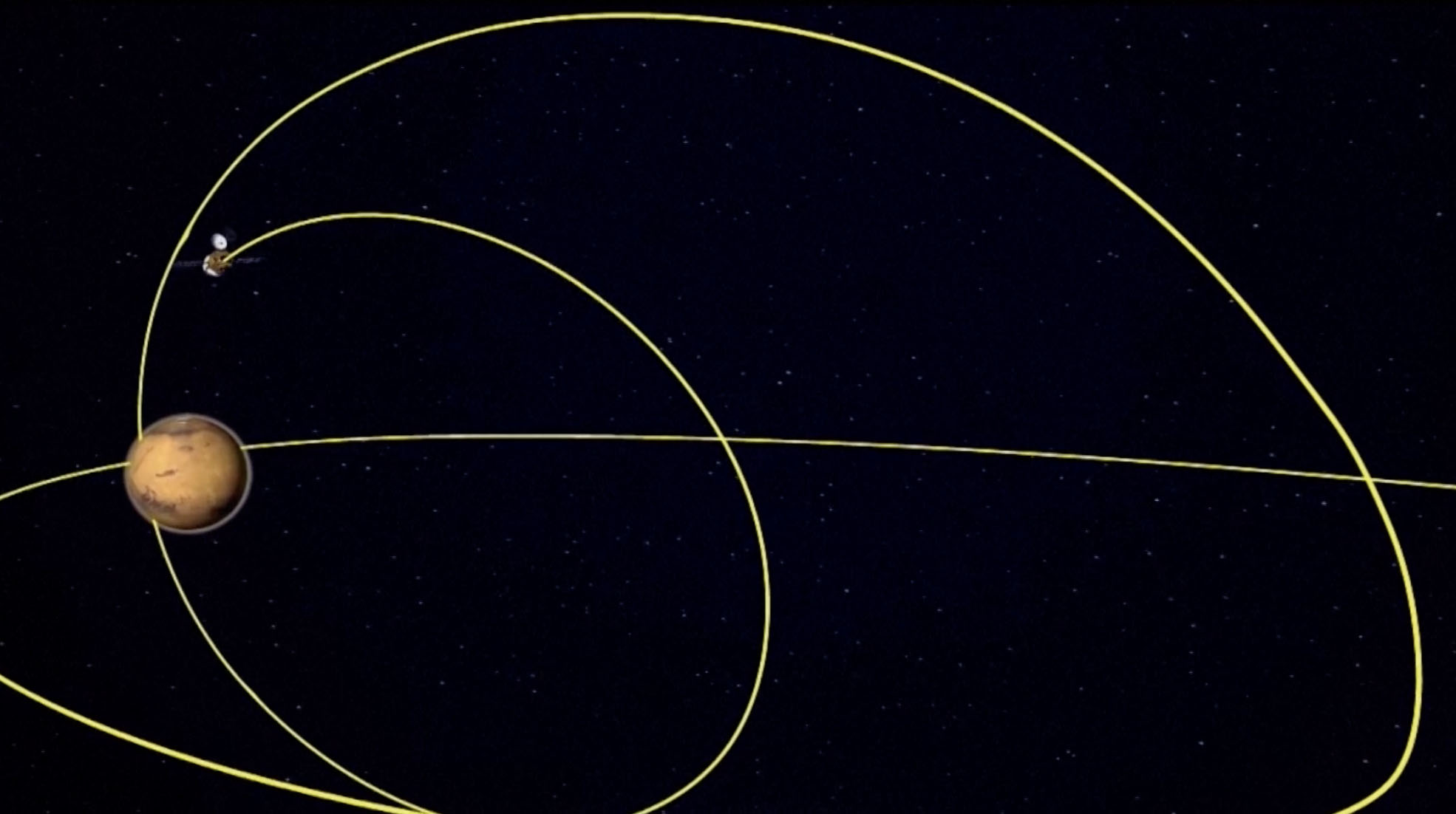
An ambitious mission
China took its get-go crack at Mars back in November 2011, with an orbiter called Yinghuo-1 that launched with Russia's Phobos-Grunt sample-return military mission. Only Phobos-Oink never made it out of World orbit, and Yinghuo-1 crashed and burned with the Russian dig into and another tagalong, the Planetary Society's Living Interplanetary Flight Experiment.
Tianwen-1 (which means "Sceptical the Heavens") is a big abuse ahead from Yinghuo-1, notwithstandin. For starters, this current mission is an entirely China-LED liaison; it was matured away the People's Republic of China Political entity Space Administration (with any international collaboration) and launched atop a Chinese Long-lived Master of Architecture 5 rocket connected July 23, 2020.
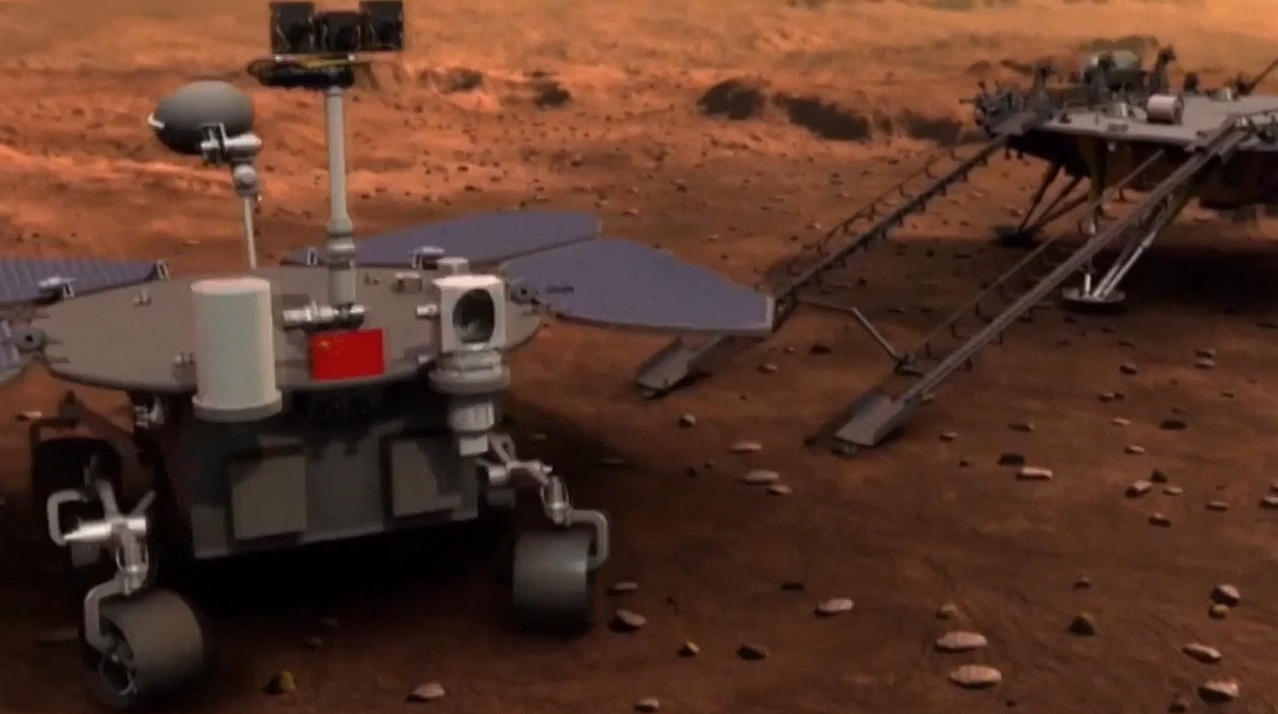
Tianwen-1 is also far more ambitious than the earlier orbiter, which weighed a short 254 lbs. (115 kilograms). Tianwen-1 tipped the scales at about 11,000 lbs. (5,000 kg) at launch, and it consists of an satellite and a lander-bird of passage duo.
These slyness will yield Mars' measure in a variety of ways. The orbiter, for example, will study the satellite from above victimisation a high-resolution television camera, a spectrometer, a magnetometer and an ice-correspondence radar instrument, among other scientific gear.
The orbiter will also relay communication theory from the rover, which sports an impressive knowledge base suite of its own. Among the rover's gear are cameras, climate and geology instruments and ground-penetrative radar, which will hunt for pockets of water system beneath Mars' red dirt.
Occupy Mars: History of robotic Red Planet missions (infographic)
"On Dry land, these pockets can host thriving microbic communities, thus detective work them on Mars would embody an important step in our search for life happening other worlds," the Planetary Society wrote in a description of the Tianwen-1 mission.
The lander, meanwhile, will serve as a political platform for the rover, deploying a ramp that the wheeled fomite will wrap down onto the Superior planet surface. The setup is similar to the one China has used on the moon with its Chang Jiang'e 3 and Chang'e 4 rovers, the last mentioned of which is still sledding strong on Earth's rocky satellite.
If the Tianwen-1 rover and Lander touch consume safely this May and gravel work, China volition become fair the secondly state, later the United States, to operate a space vehicle successfully connected the Red Planet's opencut for an considerable amount of metre. (The Union of Soviet Socialist Republics pulled off the first-ever soft touchdown on the Mars with its Mars 3 mission in 1971, just that lander died less than two minutes after hit the red-faced grime.)
The Tianwen-1 orbiter is scheduled to manoeuver for at to the lowest degree one Mars year (about 687 Earth days), and the rover's targeted lifetime is 90 Red Planet years, or sols (active 93 Earthly concern days).
Bigger things to come?
Tianwen-1 will glucinium rightful China's opening act at Mars, if all goes according to plan: The nation aims to catch pristine samples of Martian corporeal hinder to Earth past 2030, where they can glucinium examined in detail for potential signs of life and clues about Mars' long-ago transition from a relatively warm and sloughy major planet to the cold desert world it is today.
National Aeronautics and Space Administration has similar ambitions, and the first stage of its Mars sample-return crusade is already underway. The agency's Perseverance rover will touch pull down inside the Red Planet's Jezero Crater incoming Thursday (Feb. 18), kicking off a surface mission whose top-level tasks admit searching for signs of ancient Mars life story and collecting and caching several xii samples.
Perseverance's samples bequeath be hauled home by a joint NASA-European Space Bureau campaign, perhaps as early as 2031.
Thusly we deliver a lot to spirit forward to in the future days and weeks, and many reasons to keep our fingers crossed for multiple undefeated Red Planet touchdowns.
"More countries exploring Mars and our solar system means more discoveries and opportunities for global coaction," the Terrestrial planet Society wrote in its Tianwen-1 description. "Blank space geographic expedition brings out the best in us all, and when nations work together everyone wins."
Mike Wall is the author of " Out On that point " (Grand Central Publishing, 2018; illustrated by Karl Tate), a book approximately the search for alien life. Fall out him on Twitter @michaeldwall. Follow us on Twitter @Spacedotcom or Facebook.
China has made it to Mars.
The nation's primary to the full homegrown Mars mission, Tianwen-1, arrived in orbit around the Loss Satellite today (Feb. 10), reported to Chinese media reports.
The milestone makes China the sixth entity to get a investigation to Mars, connexion the In league States, the Soviet Union, the European Distance Agency, India and the United Arab Emirates, whose Desire orbiter successful information technology to the Red Planet just yesterday (Feb. 9).
And today's achievement sets the stage for something even more epic a few months from now — the touchdown of Tianwen-1's lander-wanderer pair on a large plain in Mars' northern cerebral hemisphere known as Utopia Planitia, which is expected to take place this May. (China doesn't typically publicize details of its space missions in advance, then we don't know for sure exactly when that landing will happen.)
Related: Here's what China's Tianwen-1 Mars mission will practice
See more: China's Tianwen-1 Mars mission in photos
An would-be mission
China took its first quip at Mars back in November 2011, with an satellite titled Yinghuo-1 that launched with Russia's Phobos-Grunt sample-return mission. But Phobos-Grunt ne'er made it out of Land orbit, and Yinghuo-1 crashed and burned with the Russian probe and another tagalong, the Planetary Society's Living Interplanetary Flight of steps Experimentation.
Tianwen-1 (which substance "Questioning the Heavens") is a big step up from Yinghuo-1, however. For starters, this current mission is an entirely China-led affair; information technology was developed by the Mainland China Political unit Space Brass (with some international collaboration) and launched atop a Chinese Long March 5 rocket on July 23, 2020.
Tianwen-1 is also far many difficult than the earlier orbiter, which weighed a stint 254 lbs. (115 kilograms). Tianwen-1 tipped the scales at about 11,000 lbs. (5,000 kg) at launch, and information technology consists of an orbiter and a lander-rover duo.
These craft will take Mars' measure in a variety of ways. The satellite, for illustration, will study the major planet from above using a high-resolution television camera, a spectrometer, a magnetometer and an Methedrine-mapping radar instrument, among other scientific gear.
The orbiter will also relay communications from the rover, which sports an impressive scientific suite of its own. Among the roamer's gear are cameras, clime and geology instruments and ground-penetrating radio detection and ranging, which will hunt for pockets of water beneath Mars' red dirt.
Occupy Red Planet: History of robotic Carmine Major planet missions (infographic)
"On Terra firma, these pockets can host thriving microbial communities, so detecting them on Mars would be an life-or-death interfere our search for life history on other worlds," the Planetary Club wrote in a description of the Tianwen-1 mission.
The lander, meanwhile, volition serve as a weapons platform for the rover, deploying a ramp that the wheeled vehicle will roll set onto the Martian surface. The setup is similar to the one Communist China has used on the moon with its Chang'e 3 and Chang'e 4 rovers, the latter of which is still going strong on Earth's rocky orbiter.
If the Tianwen-1 wanderer and Lander bear upon down safely this May and get to work, China testament become just the second nation, after the Confederate States, to operate a spacecraft successfully on the Mars's surface for an considerable amount of time. (The Country Union pulled off the first-ever soft touchdown on the Red Planet with its Mars 3 mission in 1971, but that Lander died less than two minutes after hitting the red dirt.)
The Tianwen-1 orbiter is scheduled to operate for at least one Mars year (about 687 Earth days), and the rover's targeted lifetime is 90 Mars days, or sols (about 93 Worldly concern days).
Bigger things to come?
Tianwen-1 will make up just China's opening act at Mars, if complete goes according to plan: The nation aims to haul pure samples of Superior planet material backward to Earth by 2030, where they can be examined in detail for potentiality signs of life and clues almost Red Planet' old transition from a comparatively nigh and soppy planet to the cold desert cosmos information technology is today.
National Aeronautics and Space Administration has similar ambitions, and the first base stage of its Mars sample-return campaign is already underway. The agency's Perseverance rover bequeath touch down inner the Red Major planet's Jezero Crater close Thursday (Feb. 18), kicking off a surface missionary station whose top-level tasks include searching for signs of antediluvian Mars life and collecting and caching some dozen samples.
Persistence's samples will be hauled home by a conjunctive NASA-European Space Agency campaign, perhaps as early as 2031.
So we get a Lot to look up forward to in the coming days and weeks, and many reasons to keep our fingers crossed for multiple successful Red Planet touchdowns.
"More countries exploring Mars and our solar system means to a greater extent discoveries and opportunities for global coaction," the Planetary Society wrote in its Tianwen-1 description. "Space exploration brings out the best in America completely, and when nations workplace together everyone wins."
Mike Palisade is the author of " Out There " (Grand Central Publication, 2018; illustrated by Karl John Orley Allen Tate), a ledger about the lookup for alien life. Follow him on Chirrup @michaeldwall. Follow us on Twitter @Spacedotcom or Facebook.
China has successful it to Mars.
The country's first amply homegrown Mars foreign mission, Tianwen-1, arrived in orbit around the Red Planet now (Feb. 10), according to Chinese media reports.
The milestone makes China the sixth entity to get a probe to Red Planet, joining the United States, the Soviet Union, the Continent Space Representation, Republic of India and the United Arab Emirates, whose Hope orbiter successful it to the Bolshy Major planet just yesterday (Feb. 9).
And now's accomplishment sets the stage for something even more epic a a couple of months from immediately — the touchdown of Tianwen-1's lander-rover pair on a large plain in Mars' northern hemisphere called Utopia Planitia, which is expected to take set down this May. (China doesn't typically publicize details of its blank missions in advance, so we don't do it sure as shootin exactly when that landing will occur.)
Correlative: Here's what China's Tianwen-1 Mars mission will do
See many: China's Tianwen-1 Red Planet missionary station in photos
An pushy mission
China took its initiatory offer at Mars back in Nov 2011, with an orbiter called Yinghuo-1 that launched with Russia's Phobos-Grunt sample-return mission. But Phobos-Oink never successful it out of Earth orbit, and Yinghuo-1 crashed and burned with the Russian probe and another tagalong, the Planetary Society's Living Interplanetary Flight of steps Experiment.
Tianwen-1 (which means "Questioning the Heavens") is a big step up from Yinghuo-1, however. For starters, this prevalent charge is an entirely PRC-led affair; it was developed past the Red China National Space Administration (with some international collaboration) and launched atop a Chinese Long March 5 rocket on July 23, 2020.
Tianwen-1 is too far more pushful than the sooner satellite, which weighed a skimp 254 lbs. (115 kilograms). Tianwen-1 tipped the scales at about 11,000 lbs. (5,000 kg) at launch, and it consists of an orbiter and a lander-bird of passage duo.
These craft will take Mars' measure in a variety of ways. The orbiter, for example, will study the planet from above using a high-resolution camera, a spectrometer, a magnetometer and an tras-mapping radiolocation instrument, among other scientific gear.
The orbiter will also relay communications from the rover, which sports an impressive technological suite of its own. Among the rover's paraphernalia are cameras, climate and geology instruments and ground-penetrating radar, which testament William Holman Hunt for pockets of water beneath Mars' red dirt.
Occupy Mars: History of robotic Red Planet missions (infographic)
"Connected Ground, these pockets can host thriving microbial communities, so detecting them along Mars would live an important step in our search for life on other worlds," the Planetary Society wrote in a description of the Tianwen-1 mission.
The lander, meanwhile, will serve as a platform for the rover, deploying a ramp that the wheeled vehicle will roll down onto the Martian surface. The setup is similar to the one China has used on the Moon with its Yangtze River'e 3 and Chang'e 4 rovers, the latter of which is still active strong on Earth's unsmooth satellite.
If the Tianwen-1 rover and lander touch modality down safely this May and puzzle out to work, China will turn just the second nation, after the United States, to operate a spacecraft successfully on the Mars's surface for an appreciable sum of money of time. (The Soviet Union pulled off the opening-ever soft touchdown on the Red Planet with its Mars 3 mission in 1971, but that lander died to a lesser degree two proceedings after striking the red dirt.)
The Tianwen-1 satellite is scheduled to control for at to the lowest degree one Mars year (or so 687 World days), and the rover's targeted lifespan is 90 Mars years, or sols (about 93 Earth days).
Bigger things to come?
Tianwen-1 will constitute just Mainland China's opening act at Mars, if all goes accordant to plan: The country aims to haul pristine samples of Martian fabric back to Worldly concern by 2030, where they seat be examined in detail for potential signs of life and clues about Mars' long-ago transition from a relatively warm up and wet planet to the cold wild world information technology is today.
NASA has quasi ambitions, and the first stage of its Red Planet sample distribution-return drive is already underway. The agency's Perseverance rover volition reach down inside the Mars's Jezero Crater next Thursday (Feb. 18), kicking off a rise up mission whose top-plane tasks include searching for signs of ancient Mars lifetime and collecting and caching several dozen samples.
Persistency's samples will follow hauled habitation by a joint NASA-European Quad Agency take the field, perhaps as archaean every bit 2031.
So we have a destiny to look bold to in the coming years and weeks, and many reasons to maintain our fingers crossed for multiple successful Red Planet touchdowns.
"Many countries exploring Mars and our solar system means more discoveries and opportunities for circular collaboration," the World Society wrote in its Tianwen-1 verbal description. "Space exploration brings stunned the best in us all, and when nations forg together everyone wins."
Mike Wall is the writer of " Stunned There " (Grand Of import Publication, 2018; illustrated by Karl Tate), a record about the seek for noncitizen life. Follow him on Chitter @michaeldwall. Follow us along Twitter @Spacedotcom surgery Facebook.
Bring together our Space Forums to keep goin speaking space on the latest missions, night toss and more! And if you let a news tip, correction or scuttlebutt, let us cognise at: residential area@space.com.

Meghan is a senior author at Quad.com and has more than five years' experience as a science journalist based in New York City. She joined Space.com in July 2018, with previous writing published in outlets including Newsweek and Audubon. Meghan earned an Massachusetts in science fourth estate from New York University and a BA in classics from Georgetown University, and in her spare time she enjoys reading material and visiting museums. Follow her on Chitter at @meghanbartels.
Where Will Voyager 1 Be in a Million Years
Source: https://www.space.com/predicting-voyager-golden-records-distant-future
0 Response to "Where Will Voyager 1 Be in a Million Years"
Post a Comment